guide / scoring

Can You Lose the First Set and Still Win in Padel?

Explore 2,785 eligible first-set-loss scorecards: 649 finished with a match win. See the denominator, a worked comeback and the limits of the result.

Quick answer

Yes. In a best-of-three match, losing the opening set still leaves a route to a two-set win. In our selected app-record study, the recording team won 649 of 2,785 eligible scorecards after losing set one: 23.3%. This describes saved scorecards in a strict cohort, not your personal comeback probability or a measure of mental toughness.

Score on your Watch.
Review on your iPhone.

Download Padel Pointer for iPhone and Apple Watch.

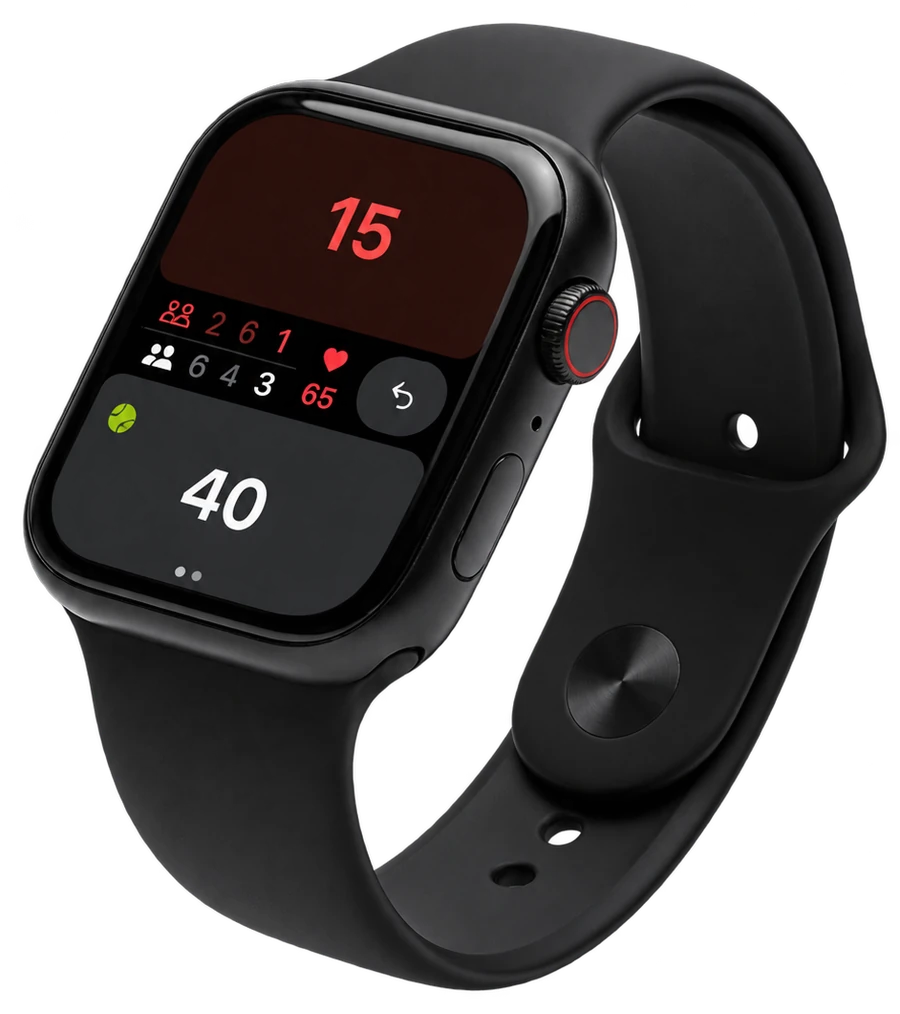
Padel Pointer showing a live padel score on Apple Watch

Explore the first-set-loss outcomes

Keep the starting condition fixed: the recording team lost set one. Compare the two eventual outcomes as shares or record counts.

Display values

23.3% — Match won after first-set loss: 649 of 2,785 eligible scorecards.

Match won after first-set loss23.3%
Match lost after first-set loss76.7%

All bars use the same full-sample scale, from zero to 2,785 records (100%). 1,033 recording profiles contributed. This selected sample describes saved scorecards; it does not predict your next result. Repeated records are not independent trials.

Read the chart data as a table
GroupScorecardsShare of sampleProfiles contributing
Match won after first-set loss64923.3%438
Match lost after first-set loss2,13676.7%905

Padel Pointer original scorecard study. Record arrival 22 August–19 November 2026 inclusive, UTC; extracted 20 November. Strict standard-scorecard cohort, production Watch records, internal/test exclusions and event UUID deduplication. Selected saved records, not a census of distinct physical matches. See the methodology below.

Read the denominator before the headline

We start with 5,889 validated scorecard-shaped records. For this question, only the 2,785 in which the recording team lost the first set belong in the denominator. Of those, 649 ended with that team winning the match and 2,136 ended with it losing. A total of 1,033 recording profiles contributed to this conditional sample.

Dividing 649 by every scorecard in the study would answer a different question: how often the sample contains a particular recording-side comeback. The chart instead keeps the first-set-loss condition fixed. Select either outcome to see its share; switching to counts makes the sample size explicit.

A comeback is about sets, not recovering every game

Consider this fictional scorecard, written with your pair first throughout: 2-6, 6-4, 6-3. Your pair loses the first set and wins the next two. The first-set deficit remains in the history; it does not carry into a running game target for the next set.

A comeback is about sets, not recovering every game
SetYour gamesOpponents’ gamesSet winner
126Opponents
264Your pair
363Your pair

Use the finding to ask a better review question

A useful personal review separates the score from an explanation. Write down one observable change between sets: return depth, communication on middle balls or fewer rushed attempts from the back. Treat that as a question for your next match, rather than claiming this study proves a tactical cause.

We have no point-by-point pressure measure in this analysis and cannot establish whether participants changed tactics. The groups also share repeat contributors. A conventional confidence interval treating every scorecard as an independent player trial would overstate what we know. Review several of your own matches before drawing a pattern.

How we selected the scorecards

This frozen observational study uses records arriving from 22 August to 19 November 2026 inclusive, in UTC, extracted on 20 November. We count each production Watch match-create event UUID once, exclude internal/test accounts and do not add the separate Watch-import mirror event. Recording profiles are analytics identities, not verified unique people. Different people can record the same physical match; a new event ID can also create overlap.

Eligibility requires a set-match record completed because its configured rules were reached, a recorded winner, elapsed time of 10–240 minutes and reported sync delay of 0–24 hours. We then require exactly two or three standard completed set scores: 6-0 through 6-4, 7-5 or 7-6, in either orientation. Two-set scorecards must have the same set winner twice; three-set scorecards must split the first two sets. The eventual set winner must match the recorded outcome, and summed games must match the stored game total. Match tie-break records are excluded.

The resulting 5,889 scorecards came from 1,396 recording profiles. This is a deliberately selected scorecard-shaped cohort, not all app activity, all completed sessions or a representative sample of padel. It does not independently verify the physical match or every configured rule. Repeated contributions are not independent trials. The saved score puts the recording team first and retains set order; we checked that definition before classifying results.

Every published group contains at least 100 scorecards from at least 20 recording profiles. A profile can contribute to several groups: do not add group profile counts. We publish only these approved aggregates, without identities, locations, health information or underlying research exports. The chart is a frozen study, not a live business dashboard.

Frequently asked questions

Does 23.3% mean I have a one-in-four chance?

No. It is 649 divided by 2,785 selected recorded first-set losses. Participant selection, repeated recording and the scorecard eligibility rules prevent a personal probability claim.

Are match tie-break comebacks included?

No. This study requires full standard-set scorecards and excludes match tie-break records. A different format needs a separate denominator.

Is a first-set loss the same as losing a break?

No. A break is a game-level event. This study classifies completed sets and does not infer breaks from final set scores.

Sources and evidence

Read next

Turn the insight into a better next match.

Track every point on Apple Watch, then understand momentum, patterns, and improvement areas on iPhone.

Padel Pointer scorekeeping on a black Apple Watch