guide / analysis

How often do padel players actually play?

Explore the reported routines of 2,694 recording profiles, keep unknown answers visible and compare weekdays without confusing self-reports with measured playing frequency.

Quick answer

Once a week was the most common known self-reported routine in this Padel Pointer sample: 897 of 2,231 profiles with an answer, or 40.2%. Another 782 reported a few times a week. There were also 463 profiles with no known answer. These are latest available responses among active app recorders, not a measured weekly schedule or advice about how often you should train.

Score on your Watch.
Review on your iPhone.

Download Padel Pointer for iPhone and Apple Watch.

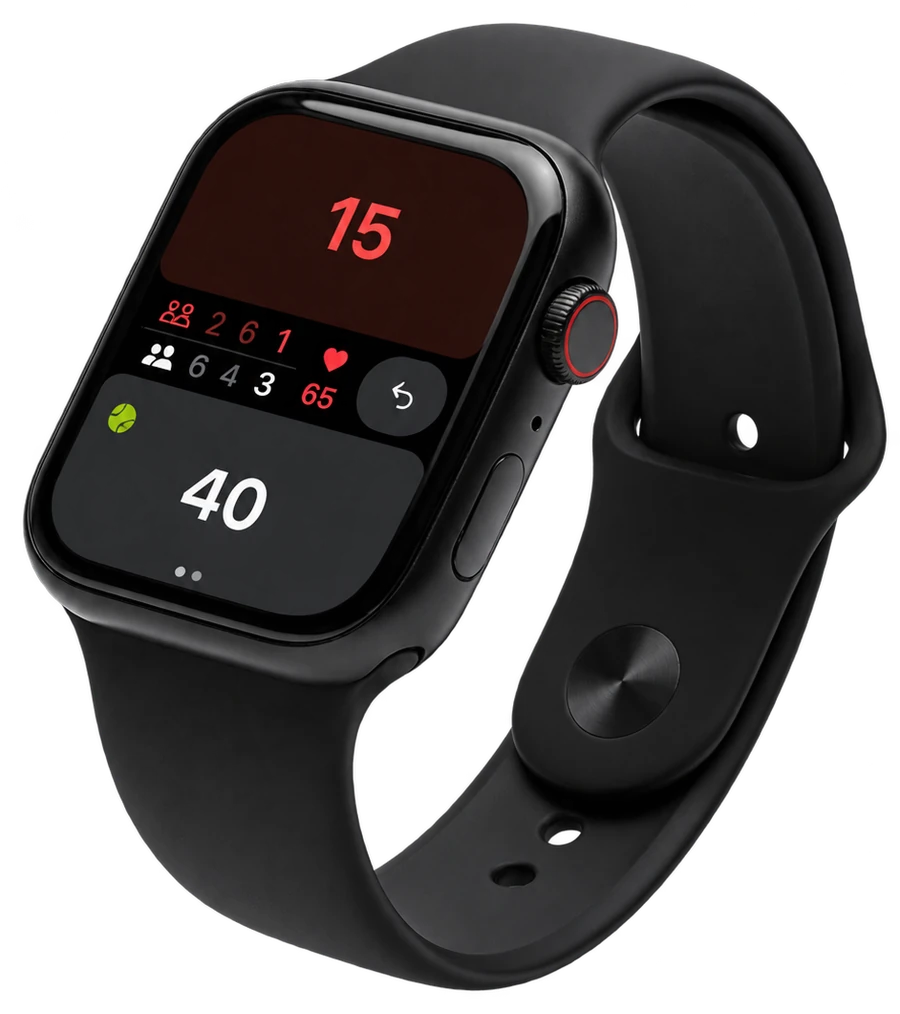
Padel Pointer showing a live padel score on Apple Watch

Find the routine behind the records

Explore self-reported routines, then switch to recorded weekdays. Keep or remove unknown answers to see how the percentage denominator changes.

Explore

One answer per profile: 2,694 profiles, including 463 with no known answer. This is self-reported frequency.

Once a week897 · 33.3%
A few times a week782 · 29%
A few times a month357 · 13.3%
Rarely161 · 6%
Every day34 · 1.3%
Unknown463 · 17.2%

Latest available non-empty response for each active recording profile in the study. Responses may be older than the match; they are not an observed playing schedule.

Read the chart data as a table
Reported routineProfiles
Once a week897
A few times a week782
A few times a month357
Rarely161
Every day34
Unknown463

Padel Pointer original research. 17 August–14 November 2026 inclusive; UTC. Production Watch records, internal/test accounts excluded, exact event UUID deduplication. Extracted 15 November 2026. Aggregate cells only; no personal identities, health readings or precise locations. Routine: latest available non-empty response per recording profile; 2,694 profiles. Weekdays: separate 10–240-minute, prompt-sync cohort, including unfinished records; stored weekday rather than import weekday.

One answer per profile, rather than one vote per match

Frequent recorders create more events than occasional recorders. If we simply counted the frequency answer attached to every match, people who record often would get more votes. We therefore used one latest available non-empty response for each of the 2,694 recording profiles active in the study window.

Among the 2,231 profiles with a known response, 897 said once a week and 782 said a few times a week: 40.2% and 35.1%. A further 357 reported a few times a month, 161 rarely and 34 every day. These labels are responses, not exact counts of completed matches.

Unknown answers change the headline

The 463 profiles without a known answer are 17.2% of the whole sample. Keep them in the explorer and “once a week” becomes 33.3% of all profiles, rather than 40.2% of known respondents. Neither percentage is inherently the right one for every question; the denominator must travel with the claim.

Unknown does not mean “never plays”. It means this analysis did not find a usable frequency response for that profile. We also do not assume missing answers resemble known answers. The switch makes that uncertainty visible rather than silently removing it.

Unknown answers change the headline
Reported routineProfilesShare of known responses
Once a week89740.2%
A few times a week78235.1%
A few times a month35716.0%
Rarely1617.2%
Every day341.5%

Recorded weekdays answer a different question

Switch the explorer to weekdays to view 24,479 eligible entries, including unfinished records. Sunday has 3,621 entries and Thursday has 3,241; the seven days are fairly close in absolute count. The field is the stored match weekday supplied by the app’s calendar at synchronisation, not simply the weekday an analytics request arrived.

We selected prompt-sync records lasting 10 minutes to four hours for this panel, so its eligibility differs from the self-report panel and from the completed-duration study. It cannot tell you the busiest hour, court availability or whether a particular player trains on a regular weekly schedule. No exact time-of-day or court location is published.

Why this does not prescribe your own playing routine

A popular routine is not a personalised recommendation. The study does not measure training quality, recovery, injury risk, improvement or all sessions that a person played without recording. A respondent saying “a few times a week” may record only some of those sessions.

Use the data as a conversation starter when arranging games: do your friends want a regular weekly slot, occasional social matches or several sessions? Agree something practical for the group. We cannot use this sample to claim that increasing session frequency causes faster improvement.

How to make a useful personal record

If your aim is to understand your own habits, record the sessions you choose to track consistently and review a fixed period. Keep training, unfinished play and completed matches distinguishable. A month with many saved entries may reflect more recording rather than more time on court.

Padel Pointer provides Watch scorekeeping and iPhone match history. That can help you look back at your recorded sessions. This article does not claim the app automatically observes every time you play, or that one analytics identity is a complete picture of one person’s activity.

Methodology and the limits of a 90-day study

This is an observational convenience sample of people using Padel Pointer on Apple Watch, not a representative survey of padel. We count each match-create event UUID once and exclude internal/test accounts and non-production events. We do not add the separate Watch-import mirror event. A recording profile is an analytics identity, not a verified unique person. Two people recording the same physical match, device identities and re-imports with a new event ID can still overlap. The 90-day window is 17 August–14 November 2026, inclusive, in UTC; it is selected by record arrival, not a complete census of matches played in those dates.

“Latest available” means the most recent non-empty response present on an eligible profile’s records in this window. It may be an onboarding answer that has not been updated. Null answers are retained as unknown if no usable response is available. We never convert the 90-day event count into a weekly playing frequency without a verified observation period for that individual.

Weekday entry counts can include multiple entries from a person, shared physical matches and different scoring configurations. Recording profiles are not a verified unique-person census. The routine chart contains no associated per-profile match counts or individual histories.

Published chart groups meet a minimum of 20 recording profiles and 100 eligible entries or set scores; profile-only routine groups need at least 20 profiles. We publish no names, account identifiers, raw individual records, health measurements or precise coordinates. Different charts have different eligibility rules, specified beside each result. This is a frozen study extracted on 15 November 2026, not a live dashboard. Results should not be generalised to all padel players.

Frequently asked questions

How often did people say they played padel?

Among 2,231 profiles with a known response, once a week was most common at 40.2%, followed by a few times a week at 35.1%. Another 463 active recording profiles had no known answer.

Is this how often people actually played each week?

No. The main panel uses self-reported routines. The study did not observe every session each person played or a consistent individual exposure window, so it cannot establish true weekly playing frequency.

Does the weekday chart include unfinished sessions?

Yes. It uses a separate cohort of prompt-sync records lasting 10 minutes to four hours, including unfinished entries. It counts entries associated with a stored weekday, not unique weekly players.

How often should I play padel to improve?

This study cannot prescribe that. It did not measure causal improvement or health outcomes. Use your goals and circumstances to plan a routine rather than treat the most common survey response as advice.

Sources and evidence

Read next

Turn the insight into a better next match.

Track every point on Apple Watch, then understand momentum, patterns, and improvement areas on iPhone.

Padel Pointer scorekeeping on a black Apple Watch