
guide / scoring

Americano vs Mexicano Padel: Scoring and Pairings

Compare Americano and Mexicano padel using a worked eight-player example. Separate round scores, individual standings and the organiser's pairing rules.

Quick answer

Americano usually follows a planned partner rotation; Mexicano uses the standings to determine later pairings. Both commonly award each player the points their pair wins in a round. These are organiser conventions, with variations, rather than one universal FIP tournament format. Confirm the pairing method, point total, byes and tie-breakers before starting.

Score on your Watch.
Review on your iPhone.

Download Padel Pointer for iPhone and Apple Watch.

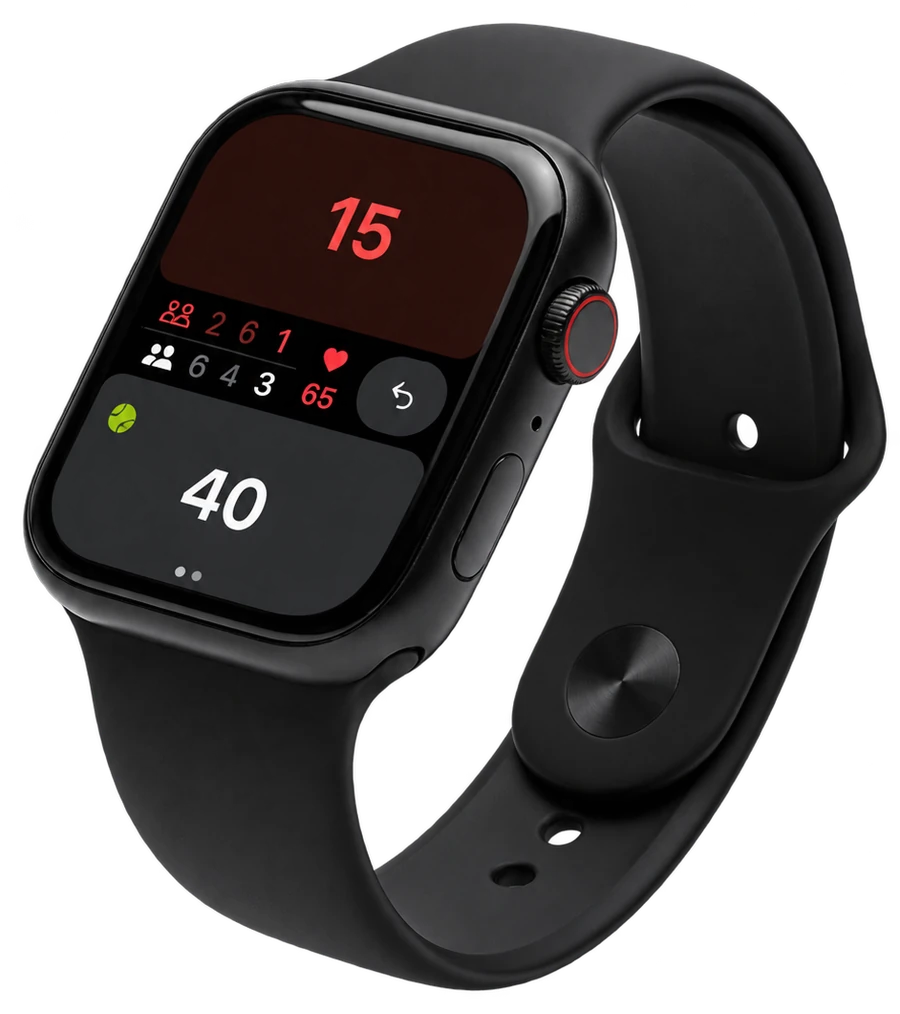
Padel Pointer showing a live padel score on Apple Watch

The difference is in the next round

If you arrive at a social event and see the same kind of running score on every court, the current round may not reveal the format. The useful question is what determines the next partner and opponent.

PlayAmericano describes rotating partners through a planned programme. Padelturn's Mexicano implementation instead creates later rounds from current standings. Those first-party descriptions establish the examples here; they do not mean every organiser uses identical rules.

The difference is in the next round
DecisionAmericano exampleMexicano example
Later pairingsPlanned rotationRecalculated from standings
Score within a roundAgreed running-point totalAgreed running-point total
Personal scorePoints earned across roundsPoints earned across rounds
Check before playRotation and byesRanking, pairing method and byes

One round: score it before thinking about rankings

Take four fictional players, A, B, C and D. A and B play against C and D in a fixed-total 16-point round. If the result is 11–5, A and B each receive 11 points in this example; C and D each receive five.

Those are individual standings contributions, not a claim that each member played 11 separate winning rallies. One pair's agreed result is credited to both partners. Record the round result once and let the organiser's standings process apply the chosen convention.

Another event may use a different total or a timed round. A 16-point illustration is not an instruction to stop your own event at 16. Read the event setup before copying the numbers.

Eight players: an illustrative Mexicano redraw

Now label the eight standings positions 1 to 8. Under the particular 1-plus-4 versus 2-plus-3 convention documented by padelturn, positions 1 and 4 meet positions 2 and 3 on one court. Positions 5 and 8 meet positions 6 and 7 on the other.

The table uses ranks, not permanent player numbers. A player can occupy a different rank after the next result. For your own session, replace the ranks with names only after the organiser confirms the standings.

Eight players: an illustrative Mexicano redraw
Court groupPair onePair two
Ranks 1–4Rank 1 + rank 4Rank 2 + rank 3
Ranks 5–8Rank 5 + rank 8Rank 6 + rank 7

Choose the event experience you want

Choose a planned rotation when the priority is a known sequence of partners and opponents. Choose a standings-based format when you want later assignments to respond to results. Neither choice proves that every player will experience identical opposition or equal court conditions.

For an Americano, ask how many rounds are needed to complete the planned rotation. For a Mexicano, ask when the standings begin controlling pairings and how tied ranks are separated. In either case, clarify how sit-outs affect the final totals.

Organisers can publish different conventions. Padelturn documents one standings-based method; pade.live describes its own ranked-court rules. Their differences are a reason to follow your event's written setup rather than treating an online example as binding.

Separate tournament organisation from match recording

Partner rotation, court assignment and standings are organiser tasks. Recording the score of the round you are playing is a different task. Padel Pointer can be used for supported match scoring on Apple Watch and match history on iPhone; this guide does not claim it generates a Mexicano tournament.

Ask the organiser where to submit the agreed result. Keep that submission separate from any personal match record. A round saved in your own app does not automatically place it into somebody else's tournament standings.

Frequently asked questions

Are Americano and Mexicano the same scoring system?

They can use similar running-point scoring within a round. The main difference in these examples is how later partners and opponents are selected.

Is 1 plus 4 versus 2 plus 3 a universal Mexicano rule?

No. It is a documented organiser convention used in this example. Confirm your event's method and how it handles tied ranks and sit-outs.

Does this guide mean Padel Pointer schedules a Mexicano?

No. Tournament scheduling and standings are separate from recording your own supported matches in Padel Pointer.

Sources and evidence

Read next

Keep a scoring reference beside the court

Save the rules guide, or download Padel Pointer to score on Apple Watch and keep your match history on iPhone.

Padel Pointer scorekeeping on a black Apple Watch