guide / intelligence lab

UK padel growth: more players, or more play?

Separate growth in app recording profiles from changes in recorded activity, with month-length controls, a repeat-recorder cohort and seven upload-country comparisons.

Quick answer

UK-associated recording profiles in our eligible app sample increased 12.6% from September to October 2026, while recorded entries increased 5.6%. Among the same recording profiles active in both months, entries fell 3.7%, or 6.8% per calendar day. These are app-recording trends linked to upload IP, not estimates of UK padel participation or verified court locations. The explorer shows relative indices rather than absolute app usage totals.

Score on your Watch.
Review on your iPhone.

Download Padel Pointer for iPhone and Apple Watch.

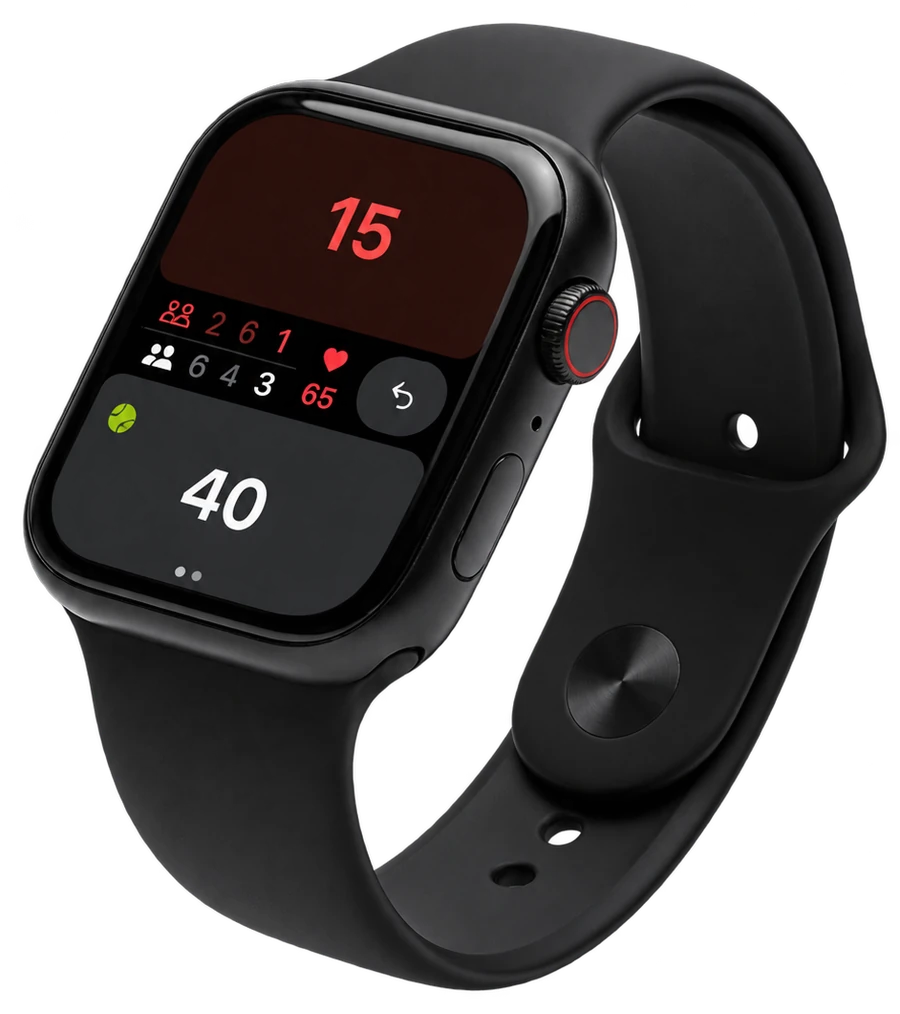
Padel Pointer showing a live padel score on Apple Watch

How did recorded activity change?

Compare relative changes from September to October, with September set to 100. Adjust for month length or follow the same UK recording cohort. Absolute app usage totals are not published.

Measure

United Kingdom: +12.6% from September to October 2026 for recording profiles. September = 100; October = 112.6. This measures relative app recording, not national participation.

United Kingdom
100September index
112.6October index
The Netherlands
100September index
114.6October index
Germany
100September index
124.7October index
France
100September index
138.1October index
Belgium
100September index
102.6October index
Spain
100September index
125.9October index
Saudi Arabia
100September index
84.6October index

Grey: September = 100. Coral: October index, rounded to one decimal. Values above 100 mean an increase; below 100 mean a decrease. This compares relative movements, not country sizes. Country is upload IP, not a verified court location. Absolute usage totals are not published.

Read the chart data as a table
Upload countrySeptember indexOctober profiles indexOctober entries indexOctober entries/day index
United Kingdom100112.6105.6102.2
The Netherlands100114.6118114.2
Germany100124.7106.7103.3
France100138.1133.4129.1
Belgium100102.696.893.6
Spain100125.9148.6143.8
Saudi Arabia10084.6123.2119.3

Padel Pointer original research. 17 August–14 November 2026 inclusive; UTC. Production Watch records, internal/test accounts excluded, exact event UUID deduplication. Extracted 15 November 2026. Aggregate cells only; no personal identities, health readings or precise locations. September/October arrival months; prompt-sync records of 10–240 minutes, including unfinished sessions. Country inferred from upload IP. Only country-month pairs passing thresholds in both months are displayed. Public values are rounded relative indices (September = 100). Exact business usage totals and country-month volumes are not disclosed.

Two growth figures can tell different stories

An app can gain recorders while existing recorders contribute fewer entries. That is what makes a single “padel is booming” percentage an incomplete description of this dataset. From September to October, UK-associated active recording profiles grew 12.6% while the number of eligible entries grew 5.6%.

Recording profiles therefore grew faster than eligible recorded entries. This describes a changing app sample, not the number of times a British padel player played. New adopters, recording habits, device identities and the mix of sessions can all move those measures. The chart sets September to 100 so readers can compare relative movements without exposing absolute app usage totals.

Relative UK-associated recording changes
Study measureSeptember indexOctober indexChange
Recording profiles100112.6+12.6%
Eligible entries100105.6+5.6%
Entries per calendar day100102.2+2.2%

Adjust for the extra day before comparing activity

October has 31 calendar days and September has 30. Their raw totals do not have identical exposure. Dividing eligible entries by days changes the UK growth comparison from +5.6% to +2.2%. The explorer lets you make that adjustment explicitly for recorded entries.

We do not divide the unique monthly profile count by days and call it daily active users. Counting distinct profiles over a month is a different operation from counting them separately each day. The interface keeps the day adjustment attached to entries only.

Follow the same repeat recorders in both months

The fixed UK-associated cohort includes recording profiles with at least one eligible entry in each month. Within that same cohort, entries declined 3.7% in October. Adjusted for calendar days, the decline was 6.8%. This comparison is shown as a relative index, without publishing the cohort’s monthly entry totals.

This sensitivity check removes the direct effect of profiles appearing in only one of the two months. It still does not measure a decline in all play: a person may record less, play without the Watch, change devices or upload from somewhere else. Requiring activity in both months also selects repeat users and is not a retention estimate for everyone who started in September.

Explore the country comparisons without turning them into a league table

The explorer includes seven upload countries with at least 100 eligible entries from 20 profiles in each month. Groups can differ substantially in size. Each starts at an index of 100, making the direction and relative size of change visible without disclosing country-by-country app adoption volumes. A small base can produce a large percentage movement; these indices are not national growth estimates.

Country is inferred from the IP address at upload, not confirmed from a court. A travelling recorder can appear in different country groups. Do not sum country profile counts as distinct global people, interpret the chart as a map of court locations, or use app adoption shares to rank national popularity.

Put original app data beside official participation research

FIP’s World Padel Report 2026, released in October, reports more than 40 million active players worldwide. That is wider sport-level context from FIP’s research, not a scale factor for this app sample. Its definitions and coverage differ from our recording-profile measures.

Our original contribution is the distinction between growth in recorded participation in the app and activity among the same repeat recorders. A club, journalist or player can use that distinction when asking better questions about growth. This sample does not establish national growth rates, court demand, market share or the reason either month changed.

How to interpret your own recording growth

For your own history, start with a consistent period and ask whether you are recording more reliably or actually arranging more sessions. Keep practice, timed sessions and completed matches distinguishable. More saved entries do not necessarily mean longer sessions or better play.

Padel Pointer lets you score on Apple Watch and review saved match history on iPhone. The explorer is a dated research view of relative recorded activity. It does not disclose absolute app usage, account growth, commercial retention, installs, revenue or conversion rates.

Study eligibility, geography and privacy

This is an observational convenience sample of people using Padel Pointer on Apple Watch, not a representative survey of padel. We count each match-create event UUID once and exclude internal/test accounts and non-production events. We do not add the separate Watch-import mirror event. A recording profile is an analytics identity, not a verified unique person. Two people recording the same physical match, device identities and re-imports with a new event ID can still overlap. The 90-day window is 17 August–14 November 2026, inclusive, in UTC; it is selected by record arrival, not a complete census of matches played in those dates.

For the monthly comparison, we use arrival dates from 1 September to 31 October 2026 and include production Watch entries lasting 10 minutes to four hours with reported sync delay at most 24 hours. Completed and unfinished records are both eligible. The recording-profile count is distinct within each country-month. The fixed UK cohort uses those same rules in both months.

The broader 90-day study and this two-month comparison are separate windows. Month totals are not re-labelled as actual match-play dates; the prompt-sync filter reduces but does not eliminate timing mismatch. Country and calendar controls improve interpretation without making the app sample representative.

Published chart groups meet a minimum of 20 recording profiles and 100 eligible entries or set scores; profile-only routine groups need at least 20 profiles. We publish no names, account identifiers, raw individual records, health measurements or precise coordinates. Different charts have different eligibility rules, specified beside each result. This is a frozen study extracted on 15 November 2026, not a live dashboard. Results should not be generalised to all padel players.

Frequently asked questions

Does this mean UK padel participation grew 12.6%?

No. The 12.6% figure is growth in eligible UK-upload-associated recording profiles in this app sample between September and October 2026. It is not a national participation estimate.

Why did total records grow while repeat-recorder records fell?

Different groups answer different questions. The all-active monthly population includes profiles active in only one month; the fixed cohort follows 396 profiles active in both. The data does not by itself establish why their recording changed.

Does the chart show where people played padel?

No. Country comes from upload IP. It is not a verified court or venue location, and travelling users may appear in more than one country. We publish no precise locations.

Why not compare installs or revenue?

These measures describe eligible match recording, not acquisition attribution. They do not establish an article-to-install link, subscription conversion or national market share.

Sources and evidence

Read next

Turn the insight into a better next match.

Track every point on Apple Watch, then understand momentum, patterns, and improvement areas on iPhone.

Padel Pointer scorekeeping on a black Apple Watch