
guide / scoring

Can You Reach Over the Net in Padel?

Check a padel over-net contact using the ball’s path and contact point. Includes the bounce-back exception, a normal volley and a simple courtside record.

Quick answer

Do not strike an incoming ball before it crosses the net to your side. FIP Rule 14.1(g) allows the specific case where the ball has bounced correctly on your side and returns over the net. Keep that exception separate from a normal volley, and do not touch the net or opponents’ court.

Score on your Watch.
Review on your iPhone.

Download Padel Pointer for iPhone and Apple Watch.

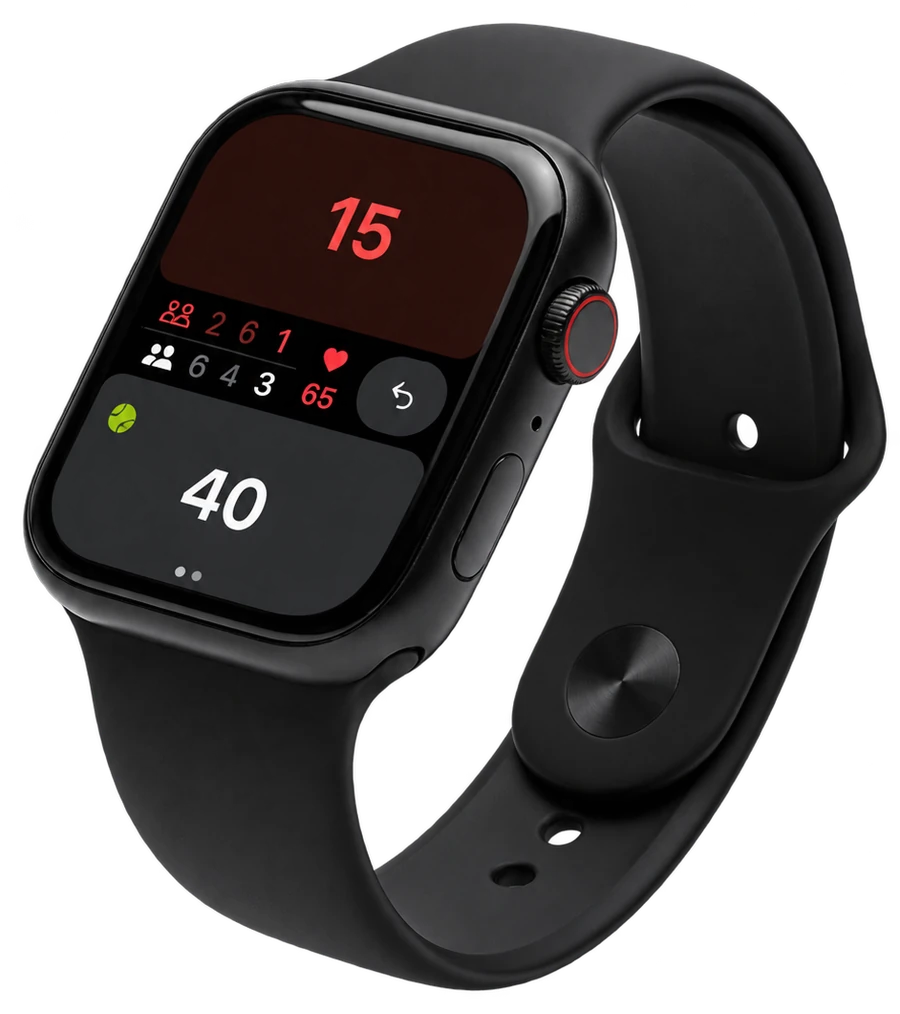
Padel Pointer showing a live padel score on Apple Watch

Locate contact before judging the finish

A racket finishing above the net is not a complete account of a shot. Establish where the ball was struck, whether it had already crossed the net, and whether it had bounced on the receiving side. Those observations separate a normal volley from the returning-ball exception.

Use four short fields if the group is confused: incoming path, bounce, contact, other contact. The final field records any net or opposing-court touch. This is an original incident checklist, not a requirement to film every social rally.

Case A: a normal volley

In the first example, a player reaches forward to intercept an opponent’s shot before it crosses into the receiving half. Calling it an attacking volley does not remove the restriction on early contact. Reconstruct the contact position rather than judging whether the player’s feet stayed behind the net.

In another example, contact occurs after the ball has crossed, and the racket continues forward in the same stroke. The relevant questions remain the contact location and whether anything touched the net or opponents’ court. A finish position alone cannot answer both questions.

Case B: a ball returns after its bounce

Picture a ball that crosses to your side, bounces correctly, then returns across the net because of its spin or rebound. The rule expressly deals with this sequence. It is not permission to lean over and intercept any low ball that has not yet reached you.

Describe this case as crossed, bounced, returned, struck. If you cannot establish the bounce on the receiving side, do not assume the exception applies. Keep the full rule available for competition and let the official decide a disputed contact.

Case B: a ball returns after its bounce
CaseKey fact
Incoming ball intercepted earlyIt has not crossed to the striker’s side
Normal shot with forward follow-throughCheck the actual ball-contact position
Ball returning over the netIt has already bounced correctly on the receiver’s side

Keep the net-touch call separate

A returning ball does not give a player permission to touch the net, its posts or the opposing court. Two checks may therefore be needed for the same attempted return: was the ball-contact sequence allowed, and was there another prohibited contact?

Avoid rehearsing a risky reach during a live point merely to settle an argument. A spoken description of the trajectory is enough for the worked example. This article explains a rule boundary, not a recommended technique for reaching into another pair’s space.

Record only the agreed result

Once the players or official settle the call, record the point and continue from the agreed score. Padel Pointer provides Apple Watch scoring and iPhone match history. It does not measure which side of the net a ball was contacted on or adjudicate the exception.

Frequently asked questions

Is any racket position over the net automatically a fault?

A finish position alone is insufficient. Check the ball’s contact position, its prior path and any prohibited net or court touch.

What makes the bounce-back case different?

The ball has already crossed and bounced correctly on the receiving side before returning over the net.

Can I touch the net when using that exception?

No. The exception does not remove the separate prohibition on net or opposing-court contact.

Sources and evidence

Read next

Keep the agreed score on your wrist

Download Padel Pointer for Apple Watch scoring and iPhone match history. Players or the official decide the correct call.

Padel Pointer scorekeeping on a black Apple Watch